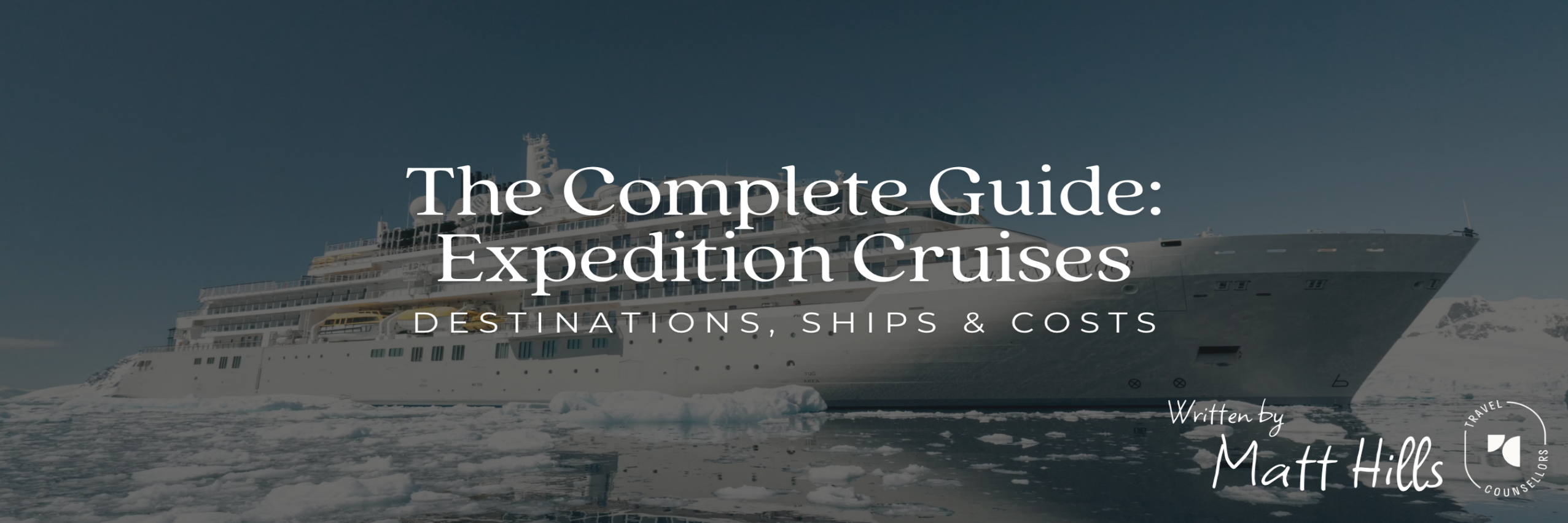
The Complete Expedition Cruise Guide
Everything you need to know about expedition cruising, including the best destinations, choosing the right ship, wildlife experiences, luxury expedition cruises, costs and practical advice for planning your holiday.
If you've ever fancied travelling somewhere a little more adventurous than the usual cruise destinations, expedition cruising is well worth looking into. We're talking Antarctica, the Arctic, the Galápagos Islands - some of the most remote and extraordinary places on the planet.
I've been lucky enough to experience an expedition cruise to Antarctica and the Galápagos Islands, both places I'd wanted to visit for years. And they were the most memorable holidays I've ever had (especially Antarctica!).
There aren't many holidays where you can spend the morning cruising between icebergs, the afternoon watching penguins and the evening listening to a scientist explaining what you've just seen.
There's quite a lot to consider when booking an expedition cruise. The ship, itinerary and time of year can make a huge difference, especially if there's specific wildlife you're hoping to see. This guide covers the main options and what I'd look for when choosing a cruise.
What Is an Expedition Cruise?
An expedition cruise is a style of cruising built around exploring the destination rather than the facilities on board the ship.
Instead of visiting large ports and spending the afternoon wandering around shops, you'll often be travelling to remote coastlines, islands, national parks and wildlife-rich areas that can be difficult to reach independently.
The ships are generally smaller than traditional cruise liners, with specialist expedition teams who organise excursions and help you really get into the nitty gritty of the places you’re visiting.
Depending on the destination, you might spend your days looking for polar bears, exploring old Antarctic whaling stations, snorkelling with sea lions or cruising alongside enormous glaciers.
Expedition itineraries are much more flexible than traditional cruises. Weather, sea ice and wildlife can all affect where you go and what you do.
You might wake up expecting to make a landing somewhere, only for the expedition team to have a completely different plan. That's part of the adventure, and personally, I think it makes the whole experience more interesting.
That doesn't mean expedition ships are uncomfortable. Far from it. Some of the modern luxury expedition vessels are exceptionally impressive. But I'd always recommend choosing an expedition cruise for the destination and experience first, rather than the number of restaurants or size of the swimming pool.
Where Are the Best Expedition Cruise Destinations?
This is where I'd start when planning an expedition cruise.
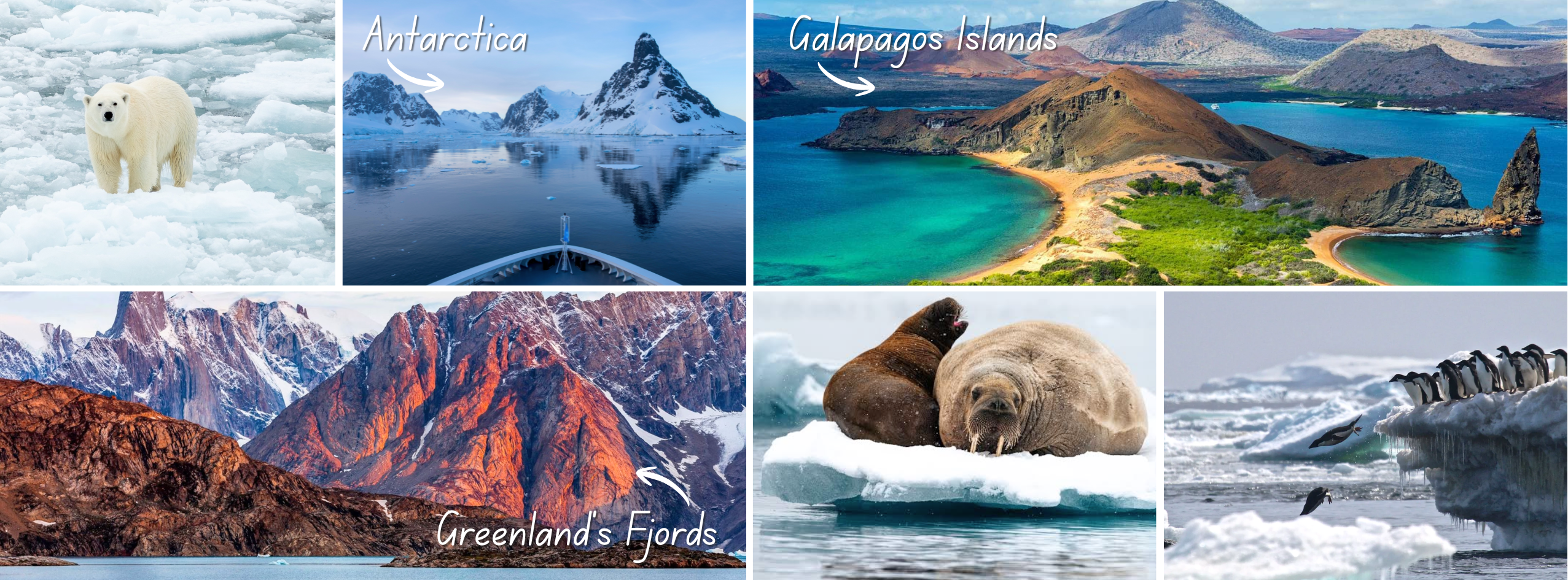
The first thing I'd decide is what you actually want to see. Antarctica is the obvious choice for penguins and enormous icebergs, Svalbard for polar bears and Arctic scenery, while the Galápagos is all about unusual wildlife, volcanic islands and marine life.
They're very different holidays, so it's worth getting the destination right before worrying about which ship to book.
Antarctica — Penguins, Icebergs and Extraordinary Scenery
Antarctica is probably the ultimate expedition cruise destination for many people. It certainly was for me.
Most classic Antarctic Peninsula cruises depart from Ushuaia in Argentina, crossing the Drake Passage before reaching the South Shetland Islands and the Antarctic Peninsula.
The first time Antarctica appears on the horizon is something I'll never forget. After a couple of days at sea, you finally start to make out land in the distance. Initially, it's just a smudge on the horizon, but before long these enormous mountains, glaciers and ice-covered cliffs come into view. You really don't appreciate the scale of everything until you're there.
And that's before you get to the wildlife. Penguins, seals, whales and seabirds are among the main attractions, along with opportunities to explore by Zodiac and make landings in some incredible locations.
I absolutely loved seeing the penguins. Anyone who knows me will know they're my favourite animals on Earth. They're hilarious on land, surprisingly smelly and incredibly graceful once they get into the water. They're worth travelling a very long way to see.
Which Antarctic Expedition Cruise Should You Choose?
For a first visit, I'd generally start by looking at a classic Antarctic Peninsula expedition. If you've got more time and budget, longer voyages can include South Georgia and the Falkland Islands, which are particularly interesting for wildlife and some pretty epic history. There are also itineraries that cross the Antarctic Circle and fly-cruise options if you'd rather avoid sailing the Drake Passage.
The best choice depends on how much time you've got and what you most want to see.
Svalbard — Polar Bears and the High Arctic
If seeing polar bears in the wild is high on your bucket list, I'd look seriously at Svalbard.
Located between mainland Norway and the North Pole, this Arctic archipelago is home to glaciers, mountains, sea ice and some remarkable wildlife.
Polar bears are one of the main attractions, although sightings are never guaranteed.
You may also encounter walruses, seals, seabirds and other Arctic wildlife.
Many expedition cruises depart from Longyearbyen, with the itinerary depending on sea ice, weather conditions and the time of year.
You might explore remote fjords, cruise alongside glaciers or travel through areas of sea ice looking for wildlife.
The Galápagos Islands — Extraordinary Wildlife and a Different Kind of Expedition
The Galápagos is a very different type of expedition cruise. Instead of glaciers and polar conditions, you've got volcanic islands, beaches, warm-weather cruising and some of the most unusual wildlife on the planet.
Giant tortoises, marine iguanas, sea lions, blue-footed boobies and albatrosses are among the main attractions.
On most itineraries, you will explore islands with naturalist guides, snorkel among marine life, visit breeding colonies and walk through volcanic landscapes.
One of the things that makes the Galápagos so special is how remarkably unconcerned many of the animals seem to be by visitors.
There are strict conservation rules, of course, but the opportunities to observe wildlife in its natural environment are extraordinary.
Is a Galápagos Expedition Cruise Better Than Staying on Land?
Both can work well, but a cruise offers some particular advantages.
You can travel between islands overnight, visit locations that are harder to reach independently and explore with experienced naturalist guides.
However, land-based holidays can suit people who prefer to stay in hotels or would rather avoid spending several nights on a ship.
Greenland and the Canadian Arctic — Remote Landscapes and Exploration
If you're interested in exploring somewhere properly remote, Greenland and the Canadian Arctic are worth a look. You'll find enormous icebergs, isolated settlements, wildlife and some fascinating polar exploration history.
Some voyages concentrate on Greenland's coastline, while others explore parts of the Canadian Arctic or attempt routes through the Northwest Passage.
They're also worth considering if you've already visited Antarctica or Svalbard and fancy exploring another part of the polar regions.
My advice: I'd look closely at the itinerary rather than simply choosing the destination name. These are enormous regions, and different voyages can offer very different experiences.
Alaska — Glaciers, Wildlife and Remote Coastlines
Alaska is another excellent expedition cruise destination, particularly if you enjoy wildlife and dramatic coastal scenery.
Small-ship itineraries can explore remote areas, fjords and waterways that larger cruise ships may not visit.
Depending on the route and season, you might see humpback whales, sea otters, seals, seabirds and bears along the coastline.
Activities can include kayaking, wildlife watching, guided walks and small-boat excursions.
Alaska also works well for people who want to combine a cruise with time exploring on land.
My advice: If you've already considered a traditional Alaska cruise, it's worth comparing that with a smaller expedition vessel. The experiences can be quite different.
Other Expedition Cruise Destinations Worth Considering
Expedition cruising isn't limited to polar regions and the Galápagos.
There are also fascinating voyages around the Kimberley coast of Australia, the Pacific Islands, parts of South America and other remote coastlines.
Some are focused on wildlife, while others concentrate more on landscapes, history, local culture or exploration.
Expedition Cruise Destinations Compared
|
Destination |
Best For |
Main Appeal |
|
Antarctica |
Penguins, whales and dramatic scenery |
Icebergs, glaciers and polar landings |
|
Svalbard |
Polar bears and Arctic wildlife |
Sea ice, fjords and remote landscapes |
|
Galápagos Islands |
Unusual wildlife and marine experiences |
Giant tortoises, sea lions and snorkelling |
|
Greenland |
Icebergs, scenery and remote communities |
Fjords, glaciers and Arctic culture |
|
Canadian Arctic |
Remote exploration and polar history |
Wildlife, communities and expedition routes |
|
Alaska |
Wildlife, glaciers and coastal scenery |
Whales, bears, kayaking and small-ship exploration |
|
Kimberley, Australia |
Landscapes and remote coastal exploration |
Gorges, waterfalls and ancient rock art |
How to Choose the Right Expedition Cruise Ship
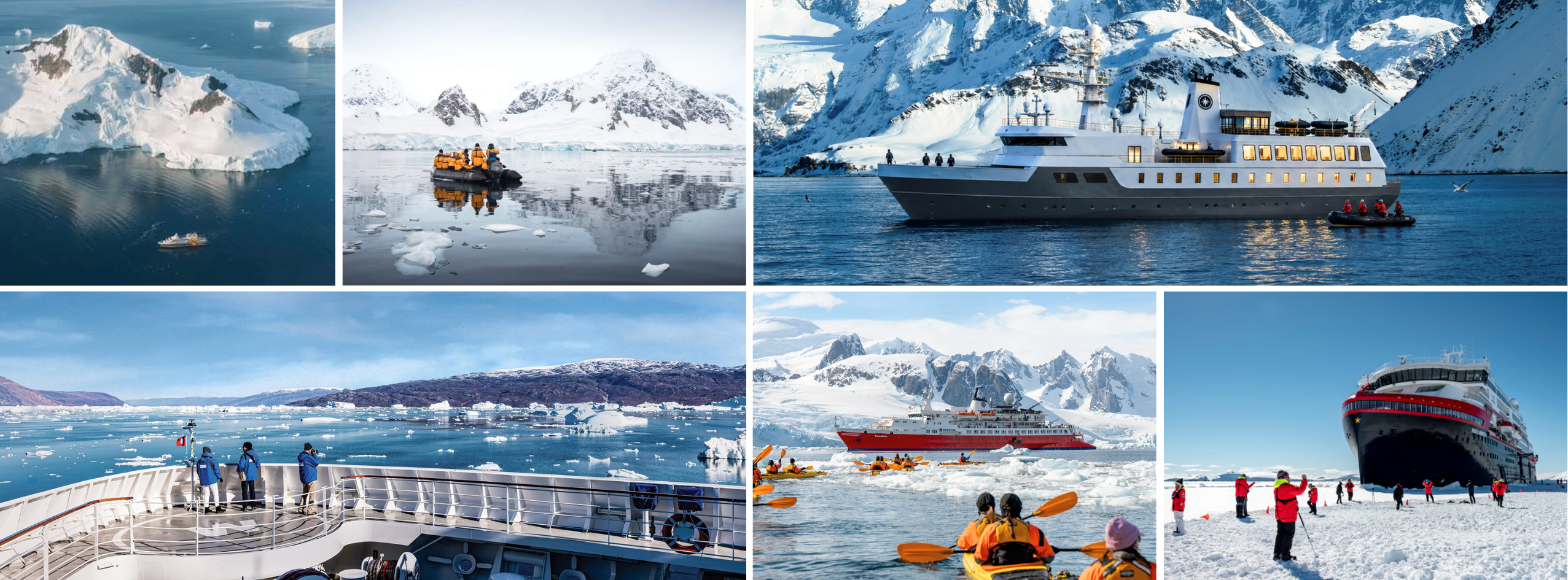
Once you've chosen the destination, the next decision is the ship. Two expedition vessels visiting exactly the same part of the world can offer very different holidays.
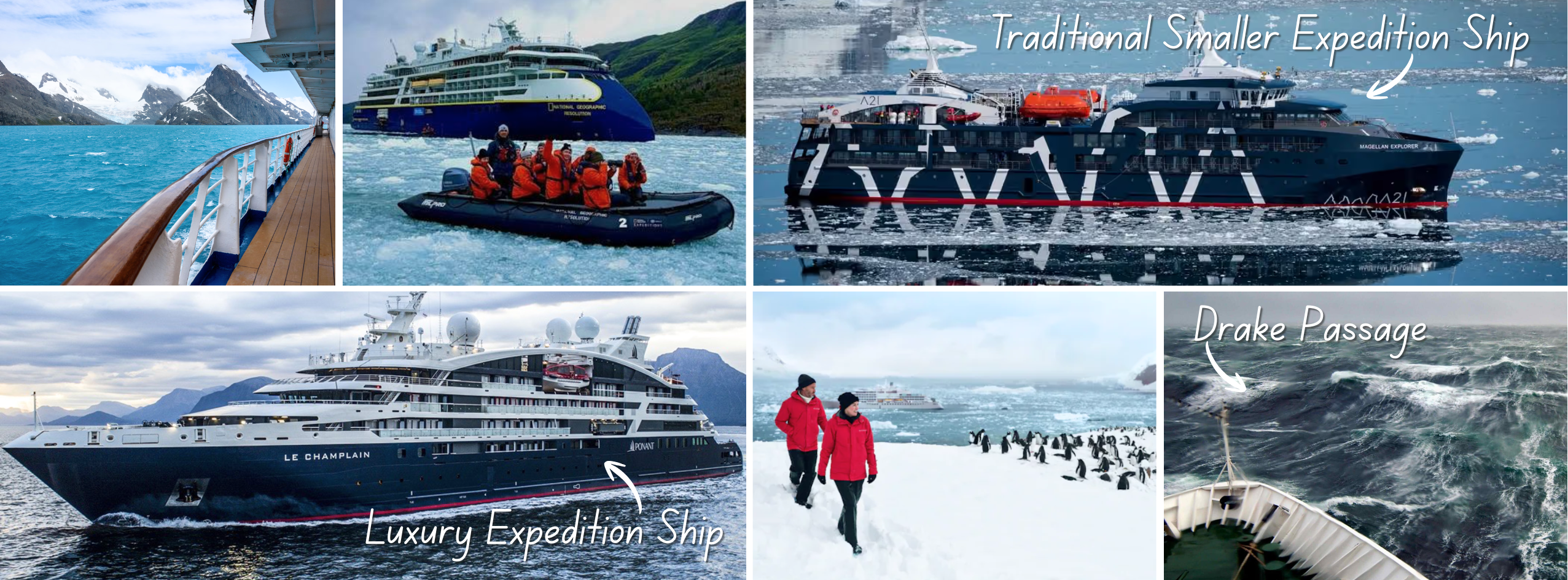
Some are smaller, traditional expedition ships. Others are modern luxury vessels with spacious suites, excellent restaurants and all sorts of facilities.
When I travelled to Antarctica with Intrepid, our ship was one of the smaller and older vessels in Ushuaia harbour. I remember seeing all these enormous ships around us and feeling rather pleased that we were heading off on a smaller, proper expedition-style vessel. It felt like an adventure before we'd even left the harbour.
But that doesn't mean I'd automatically recommend the same type of ship to everyone.
Small vs Large Expedition Cruise Ships
Smaller ships often offer a more intimate atmosphere, and in some destinations they can have advantages when organising shore landings.
Larger expedition ships may offer more spacious accommodation, additional facilities and a broader choice of restaurants.
What I'd want to know is how many passengers are on board and how often you'll actually get off the ship.
Why Ship Size Matters in Antarctica
Antarctica has strict tourism guidelines designed to protect the environment and manage visitor numbers. Under the guidelines followed by expedition operators, no more than 100 passengers can be ashore at a landing site at once, with at least one guide for every 20 passengers. Ships carrying more than 500 passengers aren't permitted to make landings at all.
If getting ashore and exploring Antarctica is important to you, I'd recommend booking a smaller expedition ship, ideally carrying 200 passengers or fewer.
Another advantage of these restrictions is that you rarely encounter other ships at the same landing sites. Only one tourist vessel can use a landing site at a time, so you're not competing with hundreds of passengers arriving from several different ships. It helps preserve that feeling of being somewhere genuinely remote, which is a huge part of the Antarctica experience (on my own two-week adventure, we only saw another ship on two occasions).
For me, getting off the ship was one of the best parts of Antarctica, so I'd always prioritise a smaller vessel if shore landings are high on your list.
Luxury vs Traditional Expedition Cruises
Traditional Expedition Ships
These tend to focus on the exploration experience, with comfortable accommodation, communal dining and practical facilities.
If you're there for the wildlife and shore landings, a traditional expedition ship is ideal.
I loved this style of expedition cruising in Antarctica. The ship had everything we needed, but nobody was there because it had the fanciest swimming pool. We were there for Antarctica.
Luxury Expedition Ships
Luxury expedition ships offer higher-end accommodation, more elaborate dining and additional facilities.
Some also include drinks, excursions and other extras in the fare. They're an excellent option if you appreciate a bit of luxury.
What Can You Do on an Expedition Cruise?
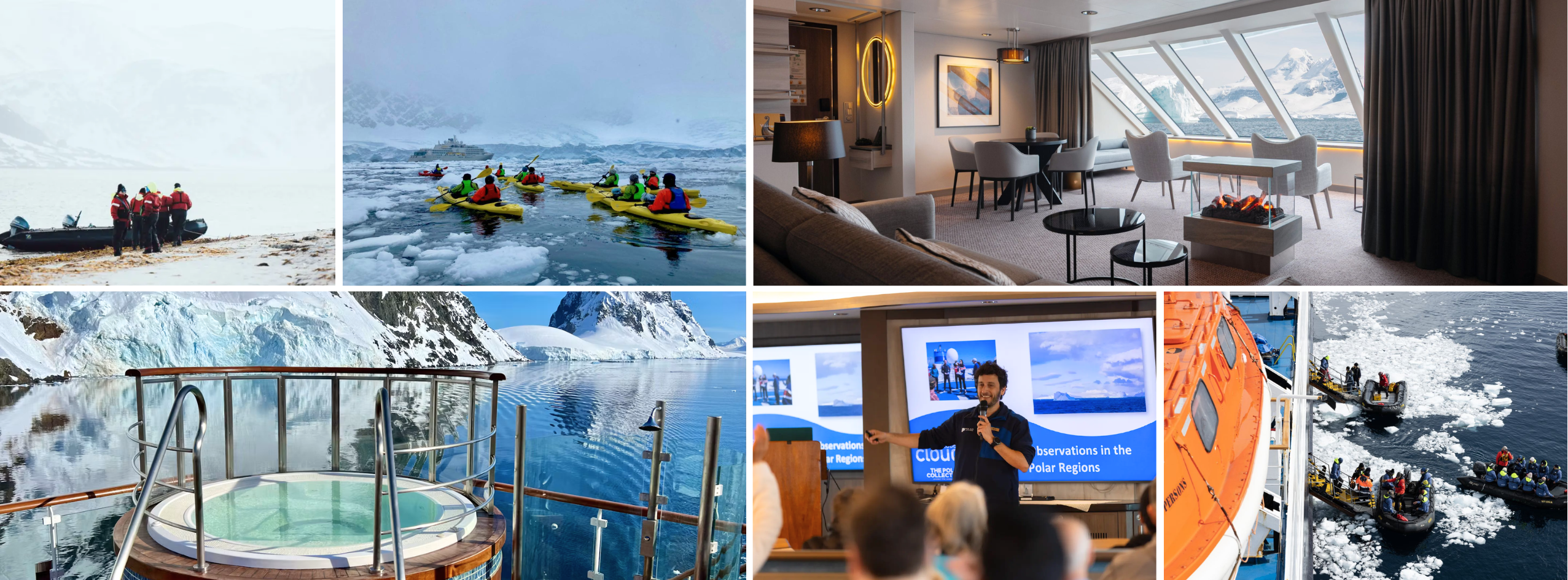
The activities depend on where you're going, but most expedition cruises involve a combination of Zodiac excursions, guided shore landings and wildlife watching.
Zodiacs are small inflatable boats used to reach places the main ship can't access. In Antarctica, we used them to explore bays full of icebergs, cruise along the coastline and travel ashore. For me, getting off the ship and actually exploring was one of the best parts.
Depending on your destination, there may also be opportunities for kayaking, hiking, snorkelling or photography excursions.
In Antarctica, some cruises offer a polar plunge, where you jump into the freezing water with a safety rope attached so the crew can help you back out. Not for the faint (or weak) hearted!
Another option is spending a night on the Antarctic ice. I did this on my expedition and it was epic. All the specialist equipment was provided, including a toilet tent. Some activities are included in the cruise fare, while others cost extra or need booking in advance.
If there's a particular activity you're desperate to do, let me know and I'll find the right cruise that offers it.
Why the Expedition Team Matters
The expedition team is one of the things I think people underestimate when choosing a cruise. You'll have specialists in wildlife, geology, history and science on board, all there to help you understand the places you're visiting.
On our Antarctica voyage, some of the expedition team had spent entire winters on the continent, and they had some incredible stories. There were wildlife presentations, displays about Antarctic exploration and even opportunities to take part in citizen science projects – it felt great to get involved.
Some operators place more emphasis on science, photography or cultural experiences than others, so I'd compare the expedition teams if you've got a particular interest.
What Is Life on Board an Expedition Cruise Like?
Life on board can be surprisingly comfortable. On my Antarctica expedition, the food was excellent, there was a bar, plenty of hot drinks and somewhere to relax between excursions.
Modern luxury expedition vessels can offer additional facilities, including multiple restaurants, gyms, spas and hot tubs. Sitting in a hot tub looking out across Antarctica is a pretty unusual experience, but one I'd definitely recommend.
Most days are fairly busy with excursions, wildlife watching and presentations, so there's rarely a shortage of things to do.
Do You Need to Be Particularly Fit?
Not necessarily, but a reasonable level of mobility helps. Some excursions involve boarding Zodiacs or walking on uneven and slippery ground, so I'd check the requirements if you have any mobility concerns. It's important to choose a cruise where you can comfortably enjoy the activities you're interested in.
When Is the Best Time to Go on an Expedition Cruise?
There's no single best time for an expedition cruise.
Wildlife movements, breeding seasons, sea ice, daylight hours and weather all play a part.
Expedition Cruise Seasons
|
Destination |
Typical Season |
Highlights |
|
Antarctica |
November–March |
Penguins, whales, icebergs and snowy scenery |
|
Svalbard |
May–September |
Polar bears, Arctic wildlife, glaciers and sea ice |
|
Galápagos Islands |
Year-round |
Giant tortoises, marine wildlife and snorkelling |
|
Greenland |
Mainly summer |
Enormous icebergs, fjords and remote settlements |
|
Canadian Arctic |
Mainly summer |
Arctic wildlife, dramatic landscapes and exploration |
|
Alaska |
Late spring–early autumn |
Whales, bears, glaciers and coastal scenery |
|
Kimberley, Australia |
Mainly the dry season |
Waterfalls, dramatic gorges and ancient rock art |
These are general guidelines rather than fixed seasons for every operator.
The best time depends on what you want to see. In Antarctica, for example, early-season voyages offer different penguin activity and snow conditions from those later in the summer, when whale watching can be particularly rewarding.
In the Arctic, sea ice conditions affect where ships can travel, so the experience can change considerably throughout the season.
If you're travelling for specific wildlife, I'd choose the departure dates carefully rather than simply booking the cheapest month.
How Much Does an Expedition Cruise Cost?
Expedition cruises are generally more expensive than traditional cruises, mainly because the ships carry fewer passengers, operate in remote destinations and require specialist equipment and expedition teams. Prices vary considerably depending on the destination, time of year, ship standard and itinerary length.
A smaller traditional expedition ship may cost substantially less than a modern luxury vessel, but I'd compare what's included before making a decision. Most expedition cruises include accommodation, meals and the main programme of guided landings or Zodiac excursions, where offered. However, flights, pre-cruise hotels, specialist activities and certain onboard extras may cost more.
I wouldn't automatically choose the cheapest cruise. I'd want to know how many days you'll spend exploring, what excursions are included and how many passengers are on board. Equally, there's no point paying thousands more for a luxury suite if you're planning to spend most of your time out looking for wildlife.
How to Choose the Right Expedition Cruise
There are quite a few things I'd want to know before recommending a particular expedition cruise.
- What do you most want to see? Penguins, polar bears, whales, glaciers or something else entirely? The wildlife and scenery you're interested in will help determine the destination and time of year.
- How important are shore landings? Some travellers are happy enjoying the scenery from the ship, while others want to get ashore as often as possible.
- What sort of ship would you prefer? A smaller, traditional expedition vessel or something more luxurious with spacious cabins and additional facilities?
- Are there particular activities you want to do? Kayaking, guided hikes, snorkelling and photography excursions aren't available on every voyage.
- What's the expedition team like? The quality and experience of the guides can make a huge difference.
- How much time have you got? Some expeditions require several flights and additional overnight stays, so the total holiday can be much longer than the cruise itself.
- What's your budget? I'd compare the complete holiday cost, including flights, hotels, transfers and any extras.
The answers to these questions will help narrow down the options considerably. I'd rather recommend a cruise that suits what you actually want to experience than simply choose the most luxurious ship or the cheapest departure.
Do You Need to Worry About Seasickness?
It's worth considering, particularly if your expedition involves open-ocean crossings.
Antarctica's Drake Passage is famous for sometimes being rough. You'll hear people talk about the Drake Lake, when conditions are calm, and the Drake Shake, when they're considerably less pleasant.
We were lucky on our voyage. We missed a major storm on the outward crossing and had almost completely flat conditions on the way back.
If seasickness is a concern, speak to a pharmacist or GP about suitable remedies. There are also Antarctica itineraries involving flights across the Drake Passage rather than sailing.
What Should You Pack for an Expedition Cruise?
Packing depends on the destination. For Antarctica and the Arctic, you'll need suitable waterproof clothing and warm layers, while the Galápagos calls for lighter clothing, sun protection and potentially snorkelling equipment. Most operators provide expedition jackets and boots, so I'd check what's included before buying anything yourself.
Common Mistakes When Booking an Expedition Cruise
There are a few things I'd particularly avoid when planning an expedition cruise.
- Assuming every Antarctica cruise includes shore landings — larger ships may offer scenic cruising only.
- Booking the wrong season for the wildlife you're interested in — timing can make a significant difference.
- Underestimating the journey to the departure port — some expeditions involve several flights and remote locations.
- Ignoring mobility requirements — Zodiac boarding and shore landings aren't suitable for everyone.
- Expecting a guaranteed itinerary — weather, wildlife and local conditions may affect the planned activities.
My Advice
I'm a huge fan of expedition cruising. My Antarctica voyage remains one of the best holidays I've ever been on, and I'd happily go back tomorrow.
I loved the scenery, the wildlife and getting out exploring in the Zodiacs, but I also learnt an enormous amount from the expedition team. Having people on board who'd spent years studying or working in Antarctica made the whole experience even more interesting and rewarding.
Would I recommend the same ship to everyone? No. I loved our smaller, traditional expedition vessel, but there are some fantastic luxury ships available too.
The main thing is making sure you book the right expedition for the experience you're hoping to have.
Ready to Start Planning?
If you're interested in expedition cruising, get in touch and I'll help you find the right voyage.
Whether you're dreaming of Antarctica, looking for polar bears in Svalbard or considering a wildlife-focused trip to the Galápagos Islands, I can help compare the expedition cruise operators, ships, itineraries and experiences available.
I'll also help arrange the flights, hotels and transfers around your cruise, so the whole holiday works together properly.
Back to Matt Hills TC Homepage